<!DOCTYPE html>
How Rodents Destroy Your North County Home Insulation
How Rodents Destroy Your North County Home Insulation
Rodents change how an Escondido home performs. They chew, dig, contaminate, and compress insulation. The attic becomes a warm nest instead of a thermal shield. In North County San Diego, the risk is higher near canyons, riparian corridors, and older rooflines. Attic Guard serves Escondido from 510 Corporate Dr # F and handles this problem every week. The team focuses on rodent proofing, attic cleaning, insulation replacement, and full biosecurity decontamination. This article explains what rodents do to insulation, why Escondido properties face unique pressure, and how a permanent exclusion and restoration process fixes the source.
Why Escondido Homes Face Heavy Rodent Pressure
Rodent movement in Escondido follows water and cover. Properties near Escondido Creek, Lake Hodges, and Daley Ranch see frequent roof rat activity. The chaparral, oak edges, and utility corridors offer routes to rooflines and eaves. Homes in Hidden Meadows, Harmony Grove, Jesmond Dene, Lomas Del Lago, Eureka Meadows, Felicita Park, and Old Escondido experience seasonal spikes, often after heat waves or rainstorms. Attic Guard notes higher call volume from the 92025, 92026, 92027, and 92029 zip codes after dry summer weeks and during fall harvesting in Valley Center and Rancho Bernardo, which shifts rodent food sources and prompts attic nesting.
Structural age plays a role. Pre-1990 roof vents and soffit assemblies leave larger intake gaps. Unscreened eave vents, loose flashing at roof-to-wall joints, and weather stripping gaps at attic hatches are frequent entry points. In Escondido, many homes share proximity to mature trees. Branch-to-roof overhang lets roof rats bridge eaves. Wind events along the Lake Hodges basin can lift old vent screens and create small openings. Rodents need less than an inch of access to enter. Once inside, they remodel the insulation for nests and trails. The fallout is costly and often hidden until energy bills spike or an odor pushes the issue.
How Rodents Destroy Insulation and Drive Up Energy Costs
Insulation performs by trapping still air within fibers or dense cellulose. Nesting, tunneling, and waste disrupt that trapped air and reduce R-value. Roof rats and house mice carve runs through fiberglass, mineral wool, and cellulose. These runs collapse fibers and leave hard-packed channels. The result is convective heat flow in winter and faster heat gain in summer. In Escondido’s inland climate, an attic that loses 20 to 40 percent of its effective R-value can add 15 to 30 percent to heating and cooling costs. In homes near the Westfield North County Mall corridor and south toward Poway, clients often notice the AC never quite catches up on peak afternoons after an infestation has matured.
Urine saturation is a second hit. Urine carries salts that bind to fiberglass threads. The mat becomes heavy and matted. Damp spots at the vapor retarder and joist bays lose loft. Ammonia odors travel down can lights and utility penetrations. Urine pheromone trails also guide repeat intrusions. Even after trapping, new rodents re-enter unless the entry points and scent trails are eliminated. This is why Attic Guard couples exclusion with pheromone blocking technology and full decontamination. Without that step, clean insulation alone will not hold off re-infestation in North County corridors.
Rodent droppings and nesting debris bring a health risk. In San Diego County, hantavirus and salmonellosis are the main concerns. Attic dust mixed with droppings can aerosolize during hot afternoons or during DIY cleanup. A proper removal uses sealed containment, HEPA vacuum extraction, and negative air control to avoid cross-contamination into living spaces. Industrial air scrubbers and ULV cold foggers reduce airborne particles before bagging waste. This level of control protects the family and keeps decontamination compliant with biosecurity standards that a CSLB-licensed, bonded, and insured contractor should follow.
Damage Beyond Insulation: Wires, Ducts, and Vents
Rodents do not stop at insulation. They chew electrical sheathing, which exposes copper and raises arc and spark risk. In several Old Escondido projects, Attic Guard found gnawed NM cable above hallway lights and near furnace junctions. Clients reported faint burning smells during heat calls. Chewed low-voltage thermostat wires create intermittent HVAC cycles that look like equipment failure. Replacement costs rise fast when access is tight or when drywall repairs follow.
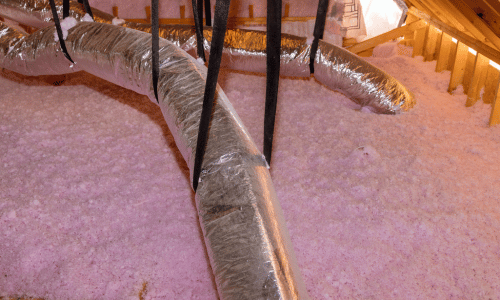
HVAC ducts are another weak point. Flexible duct lines crush under body weight and bite damage. Once outer foil is breached, the fiberglass layer pulls apart and drops fine fibers. Air leaks and pressure loss force longer blower time and raise utility bills. The team often finds main trunk breaches near attic knee walls in Hidden Meadows and along long supply runs above garages in Eureka Meadows. One 92029 home near Lake Hodges lost close to 25 percent airflow on two branches due to rodent damage spotted during a blower door test. Re-insulating ducts without exclusion is a short pause, not a fix.
Roof vent screens and soffit vents suffer as well. Light-gauge screens from past decades tear under rodent chewing. A single corner gap grows into a recurring access route. Eave gaps at rafter tails often come from warped fascia and loose drip edge flashing. Rodents use these zones to slip under tiles and into attic voids. Foundation cracks at exterior walls and utility penetrations behind water heaters and laundry rooms give access to crawl areas, then up wall chases into the attic. Closing each of these paths is the backbone of rodent proofing in Escondido.
Signs an Escondido Attic Has a Rodent Problem
Clients describe patterns that repeat across San Marcos, Vista, Valley Center, and Escondido neighborhoods. Scurrying sounds near dawn and dusk suggest active runs across joists. Odors spike on hot afternoons, then fade at night. Fine debris piles and dark rub marks appear near attic hatches. Chewed foam around plumbing stacks and dark-stained insulation around can lights signal regular traffic. If scurrying sounds are present at night, the insulation’s R-value is likely compromised due to burrowing and nesting.
Droppings reveal species. Roof rat droppings are pointed at the ends and longer than mouse droppings. Norway rat droppings are thicker and blunt. In North County homes near orchards and creek beds, roof rats dominate. Attic Guard logs species notes in inspections because entry point strategy shifts by species. Roof rats prefer high entries like roof vents, ridge vents, and eaves. Norway rats lean on foundation cracks and crawl entries. A correct approach seals both sets where needed, with special attention to high entries near tall trees around Daley Ranch and Lomas Del Lago.
What Permanent Rodent Proofing Looks Like in North County
A lasting fix blocks entries, removes attractants, and resets the attic to a clean, sanitary, and insulated state. Attic Guard uses a multi-point exclusion process that fits Escondido roof styles, vent types, and canyon-front exposure. High rodent zones near Hidden Meadows and Lake Hodges get reinforced screening at all vents and tight metal flashing at roof-to-wall transitions. Each defensible line stops climbing access and seals gnaw-prone edges. This precision is key because rodents test weak seams, push past light foam, and learn patterns quickly on familiar routes.
Hardware choices matter. The team secures roof vent screens with 1/4-inch galvanized hardware cloth fixed with exterior-grade fasteners. Eave gaps get metal flashing and sealed edges that stand up to sun and heat. Soffit vents with old mesh are upgraded to rodent-grade screens. Foundation cracks receive a layered seal that uses steel wool in voids, expanding foam as a binder, and an outer sealant or mortar patch where appropriate. Weather stripping at attic hatches and garage entries is renewed to stop gaps at doors and frames. Where tile roofs meet walls, custom flashing fills tooth-like spaces that rodents exploit. These parts form a permanent barrier that outlasts quick spray foam patches that fail in Escondido’s heat.
Safe Removal of Contamination and Odors
Health and odor control require controlled removal. Attic Guard uses HEPA-filtered vacuums to capture fine particles during insulation extraction and droppings cleanup. Industrial air scrubbers run during removal to lower airborne counts. A ULV cold fogger or thermal fogger applies hospital-grade disinfectant to break down urine pheromone trails. This step prevents future rodents from following scent maps back into the space. Surfaces, joists, and top plates receive decontamination, then a second pass targets high-traffic areas noted during inspection. The process keeps living spaces safe through containment, negative pressure, and careful bagging. It matches the biosecurity discipline expected from a CSLB-licensed, bonded, and insured contractor in San Diego County.
Waste leaves the property sealed and documented. Photo logs show before and after conditions. Clients can share this record with insurers if a policy covers a portion of restoration. Some carriers consider duct repairs and electrical hazards, but coverage varies. The Attic Guard team explains options without pressure. Clear evidence helps the homeowner decide what to handle now and what can wait. Safety items like live wires, open junctions, and flex duct breaches rarely wait, and the crew addresses those during restoration planning.
Insulation Choices for Escondido Attic Restoration
Once the attic is clean and sealed, the new insulation sets thermal performance back on track. Attic Guard installs cellulose, fiberglass batts, or blown-in fiberglass depending on structure, budget, and desired pest resistance. Many Escondido homeowners choose TAP Insulation, a borate-infused cellulose that adds pest resistance with strong thermal performance. TAP reduces insect activity and discourages nesting behavior, which supports rodent proofing goals. For clients familiar with Owens Corning’s pink fiberglass or high-density Knauf products, the team explains trade-offs. Dense materials may hold shape well under minor disturbances but can still lose performance if rodents re-enter. That is why exclusion and pheromone control come first.
R-value targets must match the inland climate. For most Escondido attics, R-38 to R-49 is standard. The crew measures joist depth and existing coverage to plan the final level. A blower machine distributes blown-in products evenly. In knee walls and short bays, custom-cut batts prevent gaps. Around can lights and chimneys, fire-rated clearances stay in place. Hatch covers receive insulated, gasketed panels to stop air bypass. The outcome is a quiet, even-tempered home that cools faster on hot 92027 afternoons and holds heat on cool 92026 nights.
Local Realities: How Geography Shapes Rodent Exclusion
Escondido’s canyons, creek systems, and winds shape rodent movement. Properties near Escondido Creek carry higher food and water access, with palm fruits, citrus, and pet food on patios acting like magnets. Homes up the slope from Daley Ranch and around Lake Hodges have elevated entry pressure from tree-to-roof traffic. The California Center for the Arts and Old Escondido districts have denser building stock with shared utility lines, which creates linked pathways. West of I-15 toward the San Diego Zoo Safari Park, wind channels pop vent caps and lift light screens if fasteners age out. Each micro-area needs a tuned plan that respects how rodents use that terrain.
Attic Guard’s technicians know the patterns by zip code. In 92025, older vents and low attic clearance call for compact tools and focused sealing at rafter tails. In 92029 near Lake Hodges, roof-to-wall flashing leaks are frequent. In 92027, long ranch layouts push duct lines across garages and additions where rodents chew easier. In 92026 and Hidden Meadows, tall trees demand a top-down approach with roof vent screens and ridge guard first. Across these areas, the team has completed numerous full attic restorations, including complex canyon-front properties that needed staged work and after-hours containment to avoid dust migration.
Materials and Tools That Make the Fix Stick
Rodent proofing is only as good as its parts. Attic Guard uses 1/4-inch galvanized hardware cloth for long-term vent protection. Steel wool fills deep voids that foam cannot secure on its own. Expanding foam binds in place and blocks airflow when used as part of a layered seal. Roof vent screens with rigid frames take the place of flimsy inserts. Custom flashing covers odd gaps at roof valleys and dormer cheeks. Weather stripping at access points closes daylight slivers that mice exploit. Each material is field-proven in hot Escondido summers and cool winter nights.
Removal and restoration rely on purpose-built equipment. HEPA vacuum systems pull fine particulates from wood fibers without recirculation. An industrial air scrubber maintains negative pressure and polishes air during work. A thermal fogger or ULV cold fogger lays down a precise fog for even contact on surfaces, allowing disinfectant to reach joist sides and hidden voids. A high-output blower machine installs new insulation to the specified depth with tight coverage around obstacles. This toolkit supports a clean, exact job and reduces the chance of rework. It also complies with biosecurity standards that protect the family and the crew.
How Rodents Use Scent to Re-Enter and Why Pheromone Blocking Matters
Rodents navigate by scent. Urine pheromone trails line runs, entries, and feeding sites. Even after trapping or a DIY cleanup, the trail can persist in timber pores and dust layers. New rodents detect the route and follow it back. This cycle explains why simple patching fails in Escondido neighborhoods with heavy pressure near Lake Hodges and Daley Ranch. Attic Guard breaks the loop by scrubbing, extracting, and disinfecting targeted zones and high-contact surfaces. The team deploys disinfectants that neutralize the scent markers without harsh residues. This pairs with sealing all active and potential entries. The attic stops broadcasting an open invitation.
Attic Proofing Details That Matter on Escondido Rooflines
Effective exclusion examines how the roof sheds water and how rodents climb. For tile roofs common in 92029 and 92025, the lift at the lower tile course invites entry. Custom flashing and tight mesh at cutouts prevent access without damming water. At asphalt shingle roofs in 92027 and 92026, ridge vents with weak baffles invite gnawing. Reinforced ridge covers solve this. Soffit vents with old mesh in Old Escondido benefit from rigid, rodent-grade screens secured to framing, not to thin fascia only. Eave gaps around rafter tails receive backer and sealants that resist UV and heat. Foundation cracks near slab edges get a permanent fill, avoiding seasonal split that re-opens the path. These measures make a long-term difference under North County sun and winter moisture.
What Homeowners Near Escondido Creek Can Check Right Now
Simple signs can point to a larger attic issue. A quick look around the exterior often reveals one or two weak spots that suggest a broader pattern. If feeders sit under eaves, if fruit trees touch rooflines, or if utility lines cross at dormers, the chance of a high entry rises. Angled daylight at dusk helps spot gaps at garage doors and attic hatches. Pet food on patios draws traffic to the edge of living spaces. These are the first hints that an attic may be active and that a full inspection is due.
- Listen at dusk for scurrying along ceilings or walls, especially near bathrooms and kitchens.
- Shine a light under eaves and along soffit vents for tears or lifted screens.
- Check garages for droppings behind water heaters and around stored pet food.
- Look for gnaw marks on weather stripping at side doors and attic hatch frames.
- Note any ammonia odor near can lights or hallway returns on hot afternoons.
Case Notes From North County Projects
Hidden Meadows, 92026. Canyon-front home with mature pines overhanging the eave. Roof rats entered through torn soffit screens and a lifted roof vent. Insulation was urine-soaked around the furnace stand and flattened along main joists. The crew sealed eave gaps with flashing and 1/4-inch galvanized hardware cloth, replaced all roof vent screens, fogged with hospital-grade disinfectant, and installed TAP Insulation to R-49. Summer AC run time dropped by about 18 percent based on the owner’s utility tracking over the next 60 days.
Old Escondido, 92025. Bungalow with knob-and-tube replaced years ago, but splices left open in the attic. Rodents chewed new NM sheathing near a junction box above the dining room. The team isolated power, coordinated a licensed electrician for safe repairs, completed HEPA extraction, and re-insulated with high-density Knauf batts in short bays. New ridge vent protection and attic hatch weather stripping closed the loop. Odor cleared within two days post-fogging.
Lake Hodges, 92029. Two-story with long flex duct runs over a garage conversion. Chewed outer jacket and collapsed elbows cut airflow to two bedrooms. After full exclusion and duct repairs, the final blower readings showed normalized supply volume. The attic received TAP Insulation, and the garage knee wall got sealed with rigid foam inserts to stop bypass air. The family noticed better temperature balance upstairs in the first week.
What Attic Guard Does on Site During a Free Escondido Inspection
Every home in Escondido is different, so the technician maps the house, the lot, and the local context before making a plan. The visit covers attic entries, roofline features, and utility points. The objective is to show exactly how rodents move now and how to lock out future attempts. The 92025, 92026, 92027, and 92029 corridors often require extra time on roof vents and ridge lines because of mature trees and wind patterns. A written, photo-backed report follows so the homeowner can review each recommendation in plain language.
- Inspect attic for droppings, nesting, urine-stained insulation, and gnawed wires or ducts.
- Trace entry points at roof vent screens, eave gaps, soffit vents, flashing seams, and foundation cracks.
- Measure current insulation depth and estimate effective R-value loss from compression and contamination.
- Test odor and dust levels, then outline decontamination steps with HEPA vacuuming and fogging.
- Present a clear scope for exclusion, decontamination, and insulation with material options like TAP Insulation.
How This Differs From a Standard Pest Control Visit
Rodent proofing is not the same as baiting or short-term trapping. Trapping can reduce noise for a week, but open entries and intact pheromone trails invite a fresh wave. Attic Guard focuses on permanent exclusion backed by a lifetime exclusion warranty on sealed entry points. The process includes decontamination to erase scent maps, then restoration to rebuild thermal performance. It uses hardware and methods beyond what a hardware store kit covers. High-end flashing, steel wool reinforcement in voids, and rigid vent solutions stand up to North County heat and wind far longer than quick foam-only fixes.
Clients often compare quotes from Orkin, Terminix, and Western Exterminator. Those providers handle general pest control well, but an attic that needs structural sealing, decontamination, and insulation benefits from a contractor who does attic restoration daily. Home Depot supplies many of the raw materials, yet the difference is in how a crew installs them on an Escondido roofline with tile transitions, solar penetrations, and odd soffit geometries. That is where local field experience pays off.
Warranty, Licensing, and Safety Standards
Trust matters when work happens above living spaces. As a CSLB-licensed contractor serving San Diego County, Attic Guard follows biosecurity protocols on every decontamination. The crew is bonded and insured. The company offers a lifetime exclusion warranty on sealed entry points. The promise is simple. If a sealed point fails, it is corrected. That confidence rests on a methodical approach, strong hardware, and careful finishing. Many Escondido homeowners call years later to add insulation to a garage or a new addition because the first project held up under seasonal stress.
Where Attic Guard Works and Why Proximity Helps
Located at 510 Corporate Dr # F in Escondido, the team reaches jobs fast across 92025, 92026, 92027, and 92029, and supports nearby 92030, 92033, and 92046 PO boxes. Service extends into Rancho Bernardo, Poway, Valley Center, Vista, San Marcos, and the greater San Diego area. Proximity to Escondido Creek and Lake Hodges means the technicians see new pressure points as seasons shift. The crew tracks rodent patterns near Daley Ranch and responds to calls after wind events that pop vent caps. This local context shortens diagnosis time and reduces repeat visits. It also helps with supply runs when a tile profile or vent style needs a specific part the same day.
Cost, Timing, and What Affects the Scope
Pricing depends on access, contamination level, roof complexity, and the number of structural gaps. A small Old Escondido attic with light droppings and two vent entries costs less than a large 92029 two-story with duct repairs and multiple ridge entries. Many projects run one to three days. Complex restorations with duct and electrical coordination can run longer. The inspection explains the trade-offs in clear terms. For example, a homeowner may choose to stage duct replacement now and add garage knee-wall sealing later. The team respects budgets while guiding choices that protect health and energy performance.
Rodent Control FAQ for Escondido Homeowners
Do you offer a warranty on exclusion work? Yes. Rodent exclusion includes a lifetime warranty on sealed entry points. If a sealed point fails, it is repaired at no charge.
Is attic cleaning safe for my family? Yes. The crew uses HEPA-filtered equipment, containment, and negative pressure with an industrial air scrubber to avoid cross-contamination into living areas.
Are you licensed in San Diego County? Yes. Attic Guard is CSLB-licensed, bonded, and insured, and follows biosecurity standards for decontamination.
What insulation do you recommend after an infestation? Many Escondido clients choose TAP Insulation for pest resistance and strong thermal performance. Owens Corning and Knauf options are available based on structure and goals.
How do you stop roof rats that run power lines? Entry control starts at roof vents, ridge vents, and eaves. The crew secures each with 1/4-inch galvanized hardware cloth, rigid vent guards, and tight flashing. Trimming branches that touch the roof also helps.
Rodent Proofing Escondido | Professional Attic Cleaning and Exclusion
Attic Guard provides permanent rodent proofing for Escondido homes. The team stops scurrying, erases pheromone trails, and rebuilds attic performance. Near Lake Hodges, Hidden Meadows, Jesmond Dene, or Felicita Park, the company understands how local terrain drives infestations and how to shut them down. Licensed, bonded, insured, and local, the company serves North County with fast response and careful workmanship. Many clients start with a free inspection in 92025 and expand to full restoration after seeing clear photos and a plan that makes sense.
Clear Signals That Say It Is Time to Act
Energy bills that climb for no clear reason, odors on hot afternoons, and late-night scurrying are more than annoyances. They point to damaged insulation, hidden contamination, and electrical or duct risks. Rodent proofing and attic restoration return safety, comfort, and control. A strong plan seals entries, removes waste, neutralizes pheromones, and restores R-value. Escondido homes near canyons, creeks, and tall trees need this plan in place before the next season drives new movement into the attic.
Strong, Local Conversion Signals for Google Map Pack and for Homeowners
Company: Attic Guard
Primary Service: Rodent Proofing, Rodent Exclusion, Attic Cleaning, Attic Restoration, Insulation Replacement, Decontamination, Pest Control, Biosecurity
Address: 510 Corporate Dr # F, Escondido, CA 92029
Phone: (760) 906-8043
Service Areas: Escondido 92025, 92026, 92027, 92029, 92030, 92033, 92046. Nearby cities include San Marcos, Valley Center, Rancho Bernardo, Poway, Vista, and San Diego.
Credentials: CSLB-licensed, bonded and insured. Eco-friendly decontamination and hospital-grade disinfectants. Pheromone blocking technology. Lifetime exclusion warranty on sealed points. Locally owned and based near Lake Hodges, Daley Ranch, and Escondido Creek corridors.
Brands and Materials: TAP Insulation for pest-resistant thermal performance. Options from Owens Corning and Knauf Insulation. Exclusion hardware includes 1/4-inch galvanized hardware cloth, steel wool, expanding foam as part of layered seals, roof vent screens, weather stripping, and custom flashing. Tools include HEPA vacuum, thermal fogger, ULV cold fogger, industrial air scrubber, and a high-output blower machine for insulation.
Ready for a Clean, Quiet, Efficient Attic
Serving the 92029 area and beyond, Attic Guard brings Escondido-focused rodent exclusion and restoration grounded in local fieldwork. Book a free 92025 attic inspection today and receive a clear entry-point report with photos and a practical plan. The crew will walk the roofline, the eaves, and the attic and explain how rodents entered and how to keep them out for good. The process is precise, safe, and built to stand up to North County conditions near Lake Hodges, Daley Ranch, and Escondido Creek.
Schedule now at (760) 906-8043 or visit the Escondido office at 510 Corporate Dr # F. The sooner the entries close and the attic resets, the faster energy bills settle and the home becomes calm again. Attic Guard is ready to help today.
Attic Guard | Escondido Office
Business Name: Attic Guard
Address: 510 Corporate Dr # F, Escondido, CA 92029, United States
Primary Phone: +1 858-400-0670
Direct Line: +1 858-786-0331
Website: atticguardca.com/escondido
Connect With Us & Read Reviews
Yelp Reviews Facebook Instagram